
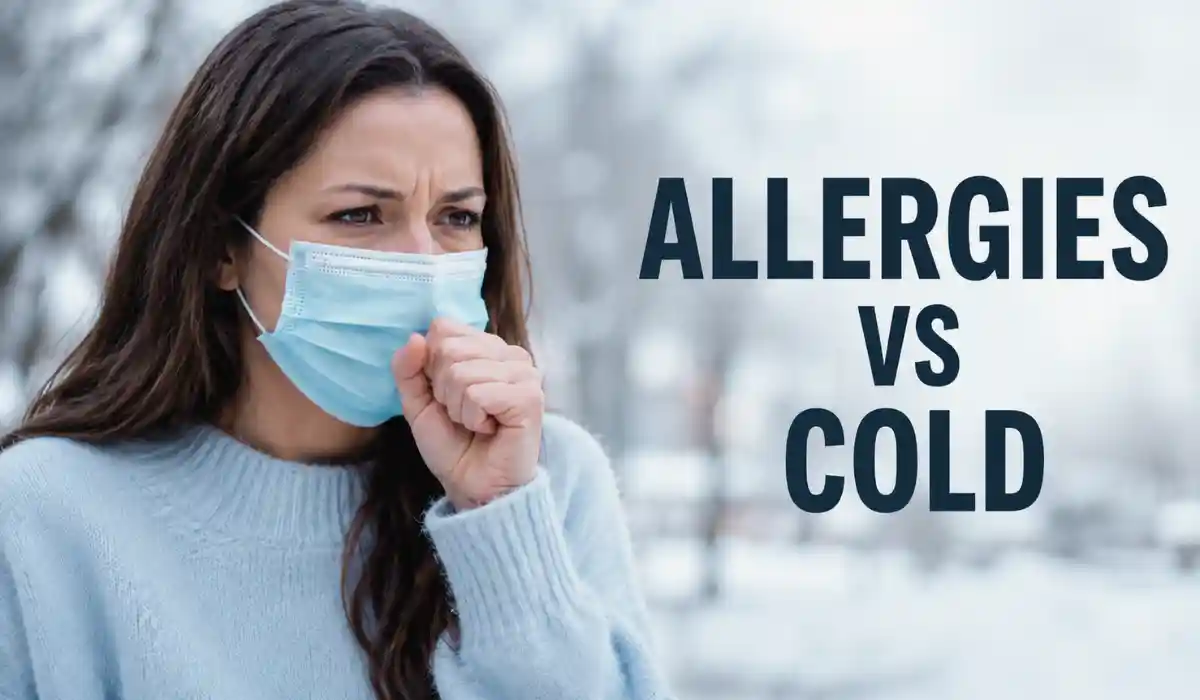
Allergies vs cold symptoms can look almost the same in the beginning. Sneezing, runny nose, stuffy nose, watery eyes, cough, and throat irritation may happen with both. This can make it hard to know whether you are reacting to an allergen or catching a common cold.
The main difference is the cause. A cold usually happens because of a virus. Allergies happen when the immune system reacts to something harmless, such as pollen, dust, mold, or pet dander. Because the causes are different, the best care may also be different.
Understanding the difference can help you choose the right relief. A cold often needs rest, fluids, and time. Allergies may need trigger control, allergy medicine, or nasal sprays. Watching your symptoms closely can help you feel better faster.
Common Symptoms That May Look Similar
Both allergies and colds can affect the nose, throat, and eyes. You may sneeze often, feel congested, or notice mucus running down the back of your throat. This can also cause a mild cough or scratchy throat.
Allergies often bring itching. Your eyes, nose, throat, or roof of the mouth may feel itchy. Watery eyes are also common. The mucus from allergies is usually clear and thin, even if symptoms continue for many days.
A cold may feel more like being sick overall. You may feel tired, achy, or weak. A sore throat may appear first, followed by congestion and cough. Some people may also get a low fever, which is not common with allergies.
Key Differences Between Allergies And A Cold
One helpful clue is how symptoms begin. A cold usually starts slowly and changes over a few days. You may first feel tired or have a sore throat, then later develop sneezing, congestion, or cough.
Allergies may start quickly after exposure to a trigger. Symptoms may appear after going outside, cleaning a dusty room, touching pets, or being near mold. They may also happen around the same season every year.
Duration is another important difference. A cold usually improves within 7 to 14 days. Allergies can last much longer if the trigger is still around. If symptoms keep returning in the same environment, allergies may be the reason. You may also notice an sore throat due allergy, especially when postnasal drip irritates the throat.
What Your Mucus, Fever, And Itching May Tell You?
Mucus can give some clues, but it does not tell the full story. Clear, watery mucus is common with allergies. A cold can also begin with clear mucus, but it may become thicker as the body responds to the virus.
Fever is more closely linked with infection than allergies. Allergies usually do not cause fever. If you have fever, chills, body aches, or strong tiredness, a cold, flu, or another infection may be more likely.
Itching is a stronger allergy clue. Itchy eyes, itchy nose, and repeated sneezing often point toward allergies. A cold may cause irritation, but it usually does not cause the same strong itching that many allergy sufferers notice.
Simple Relief Tips For Allergies
For allergy symptoms, reducing exposure is important. Keep windows closed when pollen is high, shower after outdoor activities, wash bedding often, and avoid touching your face after being around pets, dust, or mold.
Saline nasal sprays or rinses may help clear allergens from the nose. Some people may also benefit from antihistamines, allergy eye drops, or nasal steroid sprays. A pharmacist or healthcare provider can help you choose safely.
Small daily habits can also help. Use a vacuum with a good filter, keep indoor humidity under control, and clean air vents regularly. If symptoms happen every season, planning before allergy season starts may reduce flare-ups.
Simple Relief Tips For A Cold
A cold usually improves with time and supportive care. Rest helps your body recover. Drinking water, warm tea, or broth may soothe the throat and keep mucus thinner. A humidifier may also ease dryness and congestion.
Over-the-counter cold medicine may help with cough, stuffy nose, or discomfort. However, it does not cure the cold. Always read labels carefully, especially when giving medicine to children or taking other medications.
Antibiotics do not treat ordinary colds because colds are caused by viruses. If symptoms are mild, home care is often enough. If symptoms become severe or last too long, medical advice may be needed.
Signs You May Need Medical Advice
Most mild colds and allergy symptoms can be handled at home. However, some symptoms should not be ignored. Trouble breathing, chest pain, wheezing, high fever, severe weakness, or dehydration should be checked quickly.
You should also seek help if symptoms suddenly get worse after improving. Strong sinus pressure, ear pain, thick discharge with facial pain, or a cough that lasts for several weeks may need medical evaluation.
For allergies, medical advice may help if symptoms affect sleep, work, school, or daily comfort. A healthcare provider may suggest allergy testing or stronger treatment options if regular medicines are not enough.
FAQs
Yes, allergies can feel like a cold because both may cause sneezing, congestion, and runny nose. Itchy eyes and repeated symptoms suggest allergies.
A cold usually lasts about 7 to 14 days. Some cough or stuffiness may stay longer, but symptoms should slowly improve.
Allergies usually do not cause fever. Fever, chills, body aches, or strong tiredness may point more toward a cold, flu, or infection.
Yes, you can have both at the same time. Allergies may irritate your nose, while a cold virus adds more symptoms.
Look at itching, fever, timing, and duration. Itchy eyes and seasonal patterns suggest allergies, while fever and body aches suggest a cold.
References
Mayo Clinic: Cold or allergy: Which is it?
https://www.mayoclinic.org/diseases-conditions/common-cold/expert-answers/common-cold/faq-20057857
Cleveland Clinic: Is it Allergies or a Cold?
https://newsroom.clevelandclinic.org/2025/09/09/is-it-allergies-or-a-cold
NIH News in Health: Cold, Flu, or Allergy?
https://newsinhealth.nih.gov/2014/10/cold-flu-or-allergy
American Academy of Allergy, Asthma & Immunology: Colds, Allergies and Sinusitis
https://www.aaaai.org/tools-for-the-public/conditions-library/allergies/colds-allergies-sinusitis
