
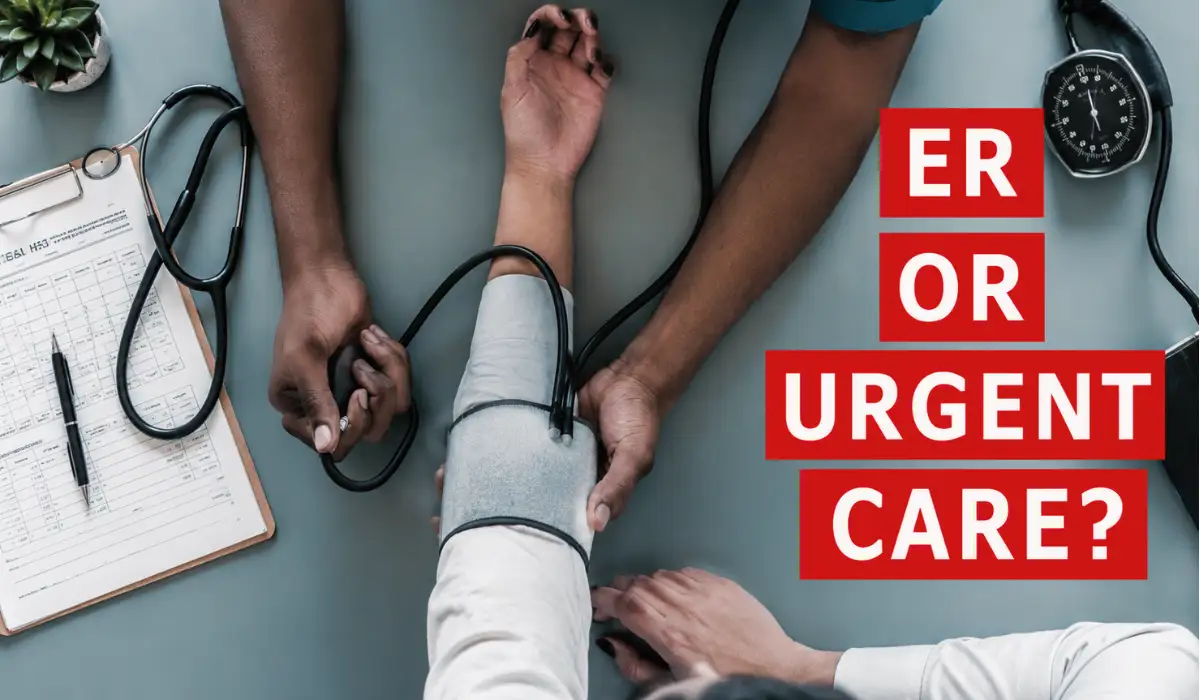
When a sudden health problem happens, it can be hard to know where to go first. Some symptoms need emergency care right away, while others can be treated safely at an urgent care center.
The choice matters because the right place can help you get faster care, avoid delays, and feel more confident during a stressful moment. This guide explains when the ER or urgent care may be the better option.
Choose The ER For Serious Or Life-Threatening Symptoms
The emergency room is the right place when symptoms may be life-threatening or could lead to serious harm if treatment is delayed. Chest pain, trouble breathing, stroke symptoms, heavy bleeding, fainting, seizures, and severe allergic reactions should be treated as emergencies.
Stroke symptoms may include facial drooping, sudden confusion, slurred speech, weakness on one side of the body, or sudden trouble walking. These signs need fast medical attention. Severe abdominal pain, major injuries, serious burns, or broken bones with visible deformity also need ER care.
The ER is also important when a person is very weak, unresponsive, or getting worse quickly. If you are unsure and the symptoms feel serious, it is safer to choose the ER. For emergencies, call 911 or your local emergency number instead of driving yourself.
Choose Urgent Care For Problems That Need Help Soon
Urgent care is often a good choice when the problem is not life-threatening but still needs medical attention soon. It can help when your regular doctor is not available, especially after hours, on weekends, or when you cannot wait several days for an appointment.
Common urgent care problems include minor sprains, mild asthma symptoms, cold symptoms, cough, sinus infection, earache, mild fever, rashes, small cuts, and minor burns. Some urgent care centers may also treat minor fractures, perform basic lab tests, or take X-rays.
Urgent care is not meant to replace the ER for serious symptoms. It is best for health issues that are uncomfortable, painful, or concerning but not dangerous right away. If the urgent care team thinks your condition is more serious, they may send you to the ER.
Pay Attention To Pain, Breathing, And Sudden Changes
Pain can help guide your decision, but it is not the only thing to consider. Mild pain from a small injury may be fine for urgent care. Severe pain, sudden pain, chest pressure, or pain with sweating, weakness, vomiting, or shortness of breath should be treated more seriously.
Breathing problems should always be taken seriously. Mild wheezing or mild asthma symptoms may be treated at urgent care if the person is alert and breathing comfortably. But severe shortness of breath, blue lips, confusion, or trouble speaking in full sentences needs emergency care.
Sudden changes are also warning signs. A sudden severe headache, sudden vision loss, sudden weakness, sudden confusion, or sudden trouble moving may point to a serious medical problem. When symptoms appear quickly or keep getting worse, the ER is usually the safer choice.
Think Carefully About Children, Older Adults, And High-Risk Patients
Children can become sick quickly, so parents should watch symptoms closely. A high fever in a very young infant, trouble breathing, extreme sleepiness, dehydration, seizures, or a child who is hard to wake should be treated as an emergency.
Older adults and people with long-term health problems may also need faster care. A mild symptom in a healthy adult may be more serious for someone with heart disease, diabetes, lung disease, kidney disease, or a weak immune system.
If a person has a serious medical history, do not ignore symptoms that feel unusual. New chest discomfort, sudden weakness, confusion, repeated vomiting, or signs of infection can become more dangerous in high-risk patients. In these cases, choosing the ER may prevent delays in care.
Costs, Wait Times, And Safety Should All Matter
Urgent care often costs less than an ER visit for minor problems. It may also have shorter wait times for common illnesses and small injuries. This makes it a helpful option when the condition is uncomfortable but clearly not an emergency.
The ER may cost more, but it has advanced tools and staff for serious problems. Emergency rooms can handle severe injuries, heart attack symptoms, stroke symptoms, serious breathing problems, major infections, and other high-risk conditions at any time of day or night.
Cost should not stop someone from getting emergency help when symptoms are serious. If the situation feels dangerous, the safer choice is the ER. When symptoms are mild and stable, urgent care may be a more practical place to start.
Quick Guide: ER Or Urgent Care?
Choose the ER for chest pain, severe breathing trouble, stroke symptoms, seizures, fainting, severe abdominal pain, uncontrolled bleeding, serious allergic reactions, major injuries, or a child who is unresponsive.
Choose urgent care for minor cuts, mild fever, cough, cold symptoms, earache, sinus infection, minor sprains, small burns, rashes without serious symptoms, or mild asthma symptoms that are not getting worse.
When the decision is unclear, focus on severity and speed. If symptoms are sudden, severe, unusual, or worsening quickly, go to the ER. If symptoms are mild, stable, and not life-threatening, urgent care may be enough.
Frequently Asked Questions
Go to the ER for chest pain, especially if it comes with shortness of breath, sweating, nausea, weakness, dizziness, or pain spreading to the arm or jaw.
Some urgent care centers can treat minor fractures and take X-rays. Go to the ER if the bone looks deformed, the pain is severe, or there is heavy bleeding.
Urgent care is often cheaper for minor illnesses and injuries. The ER may cost more because it is prepared for serious and life-threatening emergencies.
Go to the ER for fever in a very young infant, trouble breathing, seizures, extreme sleepiness, dehydration, or if the child is hard to wake.
If symptoms feel serious, sudden, or dangerous, choose the ER. It is better to be cautious when a health problem may be an emergency.
References
1. MedlinePlus
When to Use the Emergency Room – Adult
https://medlineplus.gov/ency/patientinstructions/000593.htm
2. Mayo Clinic Health System
Emergency vs. Urgent Care: What’s the Difference?
https://www.mayoclinichealthsystem.org/hometown-health/speaking-of-health/emergency-vs-urgent-care-whats-the-difference
3. Cleveland Clinic
Emergency Room, Urgent Care or Express Care: Which Do You Need?
https://my.clevelandclinic.org/health/articles/15940-emergency-room-urgent-care-or-express-care-which-do-you-need
