
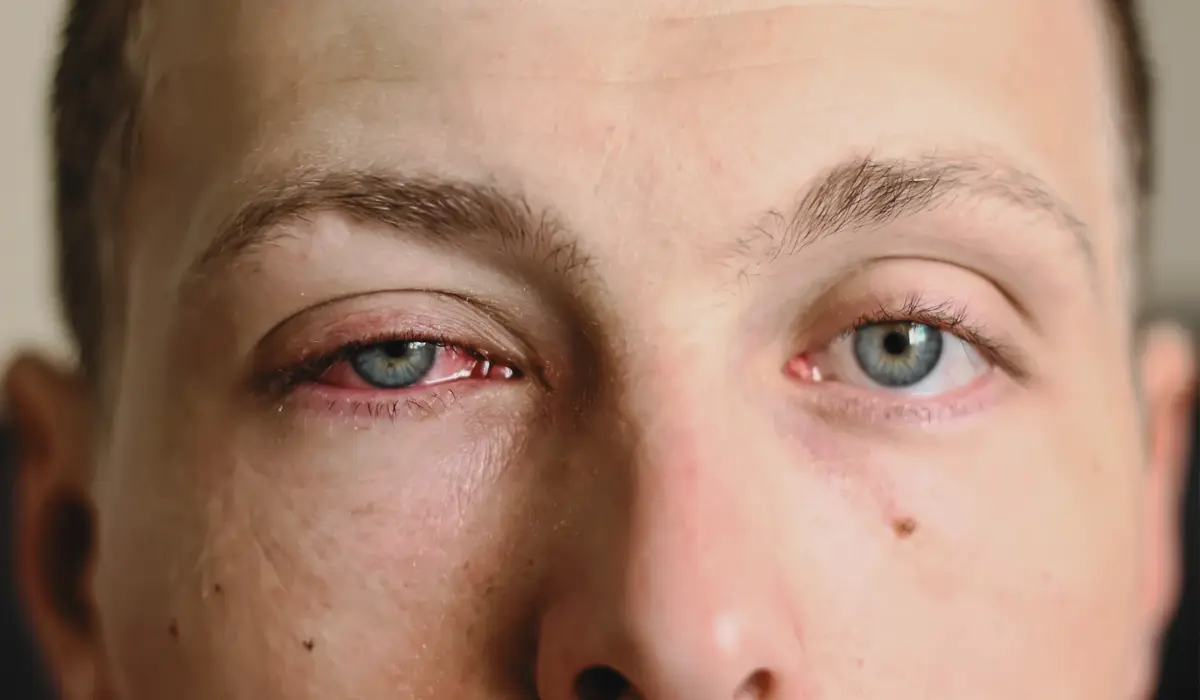
Red, itchy, watery eyes can make anyone uncomfortable. Many people quickly think they have pink eye, but allergies can look very similar. This is why the difference between pink eye vs allergies is important.
Both conditions can cause redness, burning, tearing, and irritation. However, they do not always need the same care. Pink eye can sometimes spread from person to person, while eye allergies are usually linked to pollen, dust, pets, or other triggers.
Pink Eye vs Allergies: The Main Difference
Pink eye and allergies can both affect the thin clear tissue that covers the white part of the eye and the inside of the eyelids. When this area becomes irritated, the eyes may look red or pink. This is why the two problems are often confused, especially when symptoms start suddenly.
The main difference is the cause. Pink eye is often linked to a viral or bacterial infection, although irritation and allergies can also cause conjunctivitis. Infectious pink eye may spread through close contact, shared towels, dirty hands, or touching the eyes after contact with contaminated surfaces.
Allergic eye symptoms happen when the eyes react to an allergen. Common triggers include pollen, dust mites, mold, pet dander, smoke, or certain personal care products. Allergies are not contagious. If both eyes become itchy and watery around the same time, especially during allergy season, allergies may be more likely.
Symptoms That Help You Tell Them Apart
One helpful clue is how the symptoms begin. Pink eye often starts in one eye and may later spread to the other. Eye allergies usually affect both eyes at the same time. Allergies also tend to cause stronger itching, while infectious pink eye may cause more discomfort, gritty feeling, or drainage.
Discharge is another important sign. Viral pink eye may cause watery discharge. Bacterial pink eye may cause thicker yellow or green discharge that can crust on the eyelashes, especially after sleep. This crusting can sometimes make it hard to open the eyes in the morning.
Allergies usually cause watery eyes, itching, redness, and sometimes swelling around the eyes. A person may also have sneezing, a runny nose, or nasal congestion. Pink eye may happen with cold-like symptoms such as sore throat, cough, fever, or runny nose, depending on the cause.
Home Relief And Prevention Tips
For mild eye irritation, simple care can help. A cool compress may reduce redness, swelling, and itching. Preservative-free artificial tears can help wash allergens from the eyes and ease dryness. Avoid rubbing the eyes because rubbing can make irritation worse and may spread germs.
If allergies are the likely cause, reducing exposure to triggers can help. Keep windows closed when pollen is high, wash hands and face after being outdoors, clean bedding often, and avoid touching the eyes after petting animals. Allergy eye drops may also help, but they should be used as directed.
If pink eye may be infectious, hygiene matters. Wash hands often, avoid sharing towels or eye makeup, change pillowcases, and throw away old eye cosmetics. Contact lens users should stop wearing lenses when symptoms begin and speak with an eye care professional if symptoms do not improve.
When To See A Doctor?
Most mild cases of red or itchy eyes improve with basic care, but some symptoms need medical attention. See a doctor if symptoms become worse, last more than a couple of days, or keep coming back. A doctor can check whether the cause is infection, allergy, irritation, or another eye condition.
Get urgent care if you have eye pain, blurred vision, strong light sensitivity, or a feeling that something is stuck in the eye. These symptoms may point to a more serious problem than simple pink eye or allergies. People who wear contact lenses should be especially careful.
Children, older adults, and people with weak immune systems may also need faster medical advice. If there is thick discharge, swelling, fever, or symptoms spreading in a household or school, professional guidance can help prevent complications and reduce the chance of spreading infection.
Conclusion
Understanding pink eye vs allergies can help you choose the right next step when your eyes become red, itchy, or watery. Pink eye is often caused by a virus or bacteria and may spread to others, while eye allergies usually happen after exposure to triggers like pollen, dust, mold, or pet dander.
The biggest clues are itching, discharge, and whether one or both eyes are affected. Allergies often cause strong itching in both eyes, while pink eye may start in one eye and sometimes cause crusting or thicker discharge. Still, symptoms can overlap, so guessing is not always easy.
Simple care like cool compresses, artificial tears, handwashing, and avoiding eye rubbing can help mild symptoms. But if you have pain, vision changes, light sensitivity, thick discharge, or symptoms that do not improve, it is best to see a doctor or eye care provider.
FAQs
No. Pink eye caused by viruses or bacteria can be contagious, but allergic conjunctivitis is not contagious. The cause decides whether it can spread.
Yes. Allergies can cause red, watery, itchy eyes that look like pink eye. Strong itching and both eyes being affected often suggest allergies.
Bacterial pink eye may cause thick yellow or green discharge. The eyelashes may crust overnight, making the eyes hard to open.
Allergy drops may help allergic eye symptoms, but they may not treat infectious pink eye. A doctor can suggest the right option.
Worry if you have eye pain, blurred vision, light sensitivity, worsening symptoms, or contact lens-related irritation. These signs need medical attention.
References
Mayo Clinic. Pink Eye: Symptoms and Causes
https://www.mayoclinic.org/diseases-conditions/pink-eye/symptoms-causes/syc-20376355
Cleveland Clinic. Pink Eye vs. Allergies: What Do You Have?
https://health.clevelandclinic.org/pink-eye-vs-allergies
Centers for Disease Control and Prevention. Conjunctivitis: Causes and How It Spreads
https://www.cdc.gov/conjunctivitis/causes/index.html
American Academy of Ophthalmology. Eye Allergies: Why Are My Eyes Itchy?
https://www.aao.org/eye-health/diseases/allergies
